

Drone swarms represent a pinnacle of coordination and efficiency in the modern technological landscape, offering unprecedented capabilities in a variety of use cases. These marvels heavily rely on a robust and reliable drone swarm network for successful operations, ensuring seamless communication between drones and ground control.
Our journey in managing a drone swarm of 50+ drones flying up to 50 km from ground control has endowed us with insights and experiences we are eager to share. This highlights the critical role of Meshmerize features in drone swarm orchestration.
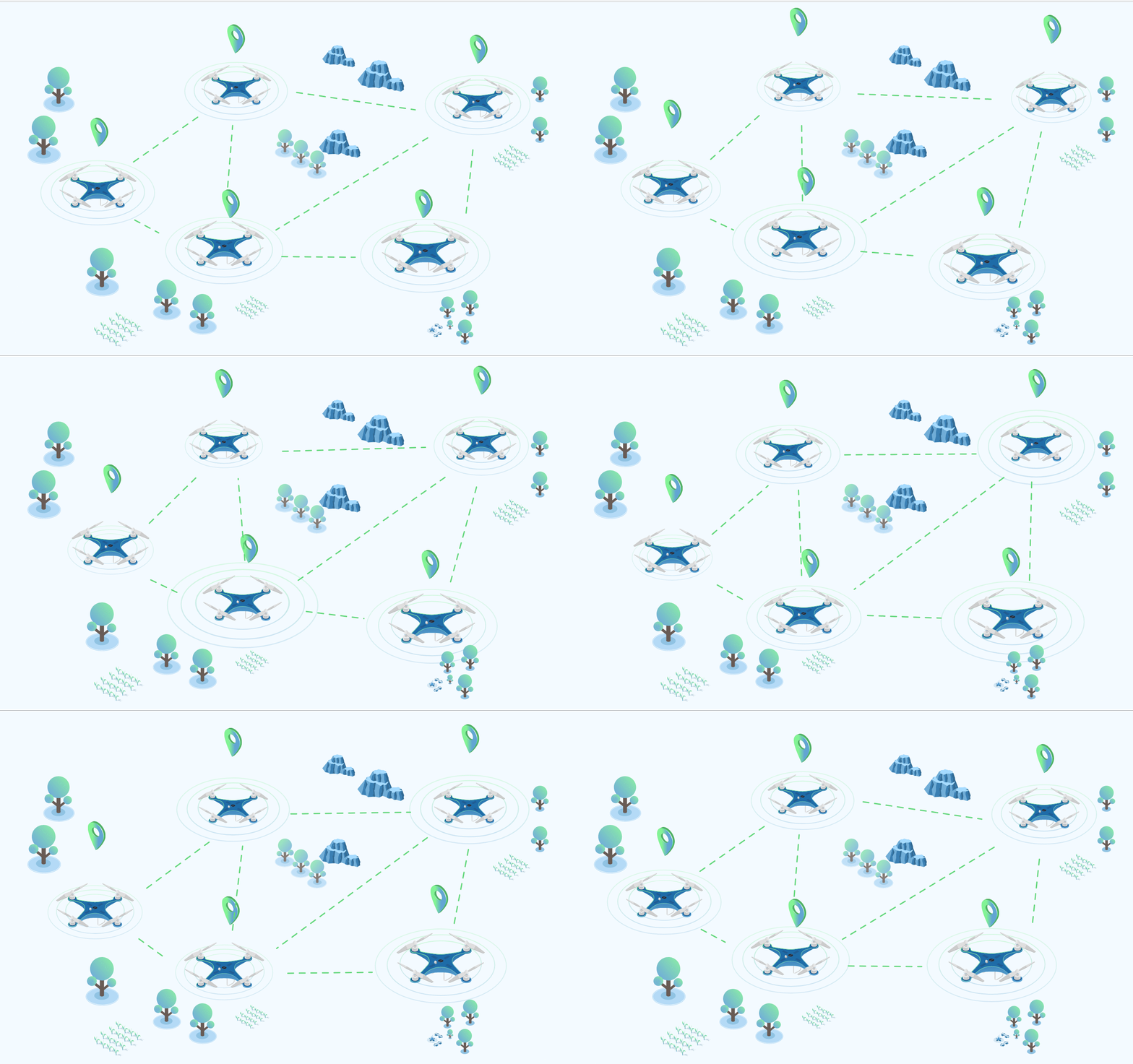
Key challenges in drone swarm connectivity
Drone swarms excel in executing complex missions. Nonetheless, their success relies on exceptionally reliable connectivity, particularly in remote or other challenging environments.
- Remote operations: In areas like search and rescue zones, where traditional networks are sparse or absent, drone swarms must rely on self-sufficient communication systems.
- Collision avoidance: To prevent collisions, drones need to continuously share positional data and maintain a safe distance from each other.
- Long-range connectivity: Maintaining a stable long-distance link is vital as swarms move away from their control stations.
- Video feed bandwidth: Video streaming demands substantial bandwidth. Inconsistent connectivity can lead to interrupted feeds, risking collisions, and other accidents.
Addressing these challenges requires a robust and flexible network. Goal: uninterrupted performance across diverse landscapes and handling a range of traffic types.

Drone swarm connectivity addressed with Meshmerize
Refining broadcast efficiency
Typically, in conventional networks, broadcasting operates on a simple principle: a message intended for all nodes is sent. After each of the nodes in the proximity receives it, it further disseminates this message to its immediate neighbors. This approach can cause redundancy and inefficiency in dense networks, where drones repeatedly broadcast messages, leading to unnecessary congestion.
Meshmerize does broadcasting with an innovative approach inspired by natural echolocation, similar to how bats navigate and communicate. Our mesh smartly manages the broadcast of crucial data, such as each drone’s 3D geolocation, which is transmitted at a rate of five times per second to maintain a ‘personal space’ and prevent collisions. While broadcasting, each of the 50 drones managed a throughput of approximately 200kbps.
Also, Meshmerize uses selective rebroadcasting to reduce traffic by having drones listen for message echoes from neighbors. If the message is already echoed, the drones refrain from rebroadcasting, thus preserving bandwidth and preventing network congestion. In essence, Meshmerize revolutionizes the broadcasting process within dense mesh networks by introducing a level of efficiency and intelligence previously unattainable.

Traffic prioritization for operational efficiency
Traffic prioritization is crucial in drone networks to prevent high-bandwidth video feeds from congesting the network and risking timely command delivery, which could disrupt operations and cause collisions. Recognizing this, Meshmerize is engineered to ensure that command messages have an express lane. Our network architecture is designed to recognize and categorize different data types, assigning each a specific priority level based on its importance to the swarm’s operation.
This prioritization ensures urgent transmission of critical commands for drone response and coordination. The hierarchy is as follows: control traffic is the top priority for directing swarm motion, followed by broadcast traffic for collision avoidance, then video feeds for situational awareness, and lastly, auxiliary data like data logs. By implementing this tiered system of priorities, we ensure that each piece of data is transmitted according to its operational importance. This approach optimizes the network’s efficiency and the drones’ performance.
Enhanced Video Streaming
The drone swarm network features an advanced video streaming feature designed to deliver high-definition visuals from drones directly to the operators. This capability is pivotal for critical missions requiring visual oversight, such as environmental surveillance or search and rescue endeavors.
Operators can access feeds from five or more drones simultaneously at 2.5 Mbps, transforming the ground station into a dynamic control hub. Combined with the prioritized traffic mentioned earlier, this ensures comprehensive situational awareness without compromising network efficiency, making real-time decisions more informed and precise.

Robust long-distance communication – flying the extra mile
But how do you handle the 50 km distance between the swarm and ground control? Five drones outfitted with specialized long-distance radios are central to our ground-to-air connectivity.
. These drones play a crucial role as relay points, broadening the network’s reach and maintaining stable connectivity to ground control.
Ground control doesn’t need to worry about the technicalities of selecting relay points. The system autonomously determines the best route for command and video data, prioritizing operational commands to enhance drone safety. This seamless integration of ground stations and long-range radios into the mesh network exemplifies Meshmerize’s commitment to delivering a resilient, adaptable, and high-performing drone communication system.

Choosing the right hardware
Beyond the software intricacies, the choice of hardware, particularly antennas and radios, plays a pivotal role in the network’s performance. Our commitment to excellence led us to select lightweight yet powerful Acksys EmbedAir hardware, optimizing energy efficiency and communication range.
Elevating innovation through seamless drone swarm networks
This project has truly showcased the strength of Meshmerize’s drone swarm network solutions. We’ve created a system where crucial commands sail smoothly through the air. The network ensures drones perform flawlessly, even from 50 km away. Our tech allows operators to pull in video from multiple drones, making complex tasks like search and rescue more manageable. And with our smart mesh network picking the best communication paths, every mission runs more smoothly. This journey has been a testament to pushing limits and redefining what’s possible in drone technology. We’re excited and ready for what’s next, with Meshmerize leading the way.
This journey has not only stretched the boundaries of drone capabilities but also highlighted the endless possibilities when innovation meets determination. As we look to the future, Meshmerize is committed to pioneering further advancements in drone communication technology.
Meshmerize is a startup based in Dresden, Germany that provides the ultimate mesh network software to an array of industries. The full potential of Meshmerize is yet to be seen. We would like to hear your thoughts – let us know what you think at hello@meshmerize.ne