
Tunnel construction sites present a challenging environment, which makes ensuring seamless and uninterrupted connectivity an ongoing struggle. Construction teams face numerous factors that threaten communication infrastructure, making it crucial to have a resilient solution that goes above and beyond to ensure uninterrupted operations.
If you’re in the construction industry, you understand the importance of reliable connectivity. The ability to maintain communications is essential for efficient operations and ensures the safety of workers. However, finding a connectivity solution that meets your needs without breaking the bank can be daunting.
Meshmerize is a game-changing mesh network software purpose-built for industrial uses and connecting moving machines. It offers a reliable cost-effective solution without compromising performance, and lets you choose whatever commercial hardware you want, or already have.
Join us as we explore the cutting-edge connectivity solution that has the potential to transform the way tunnel construction sites are connected.
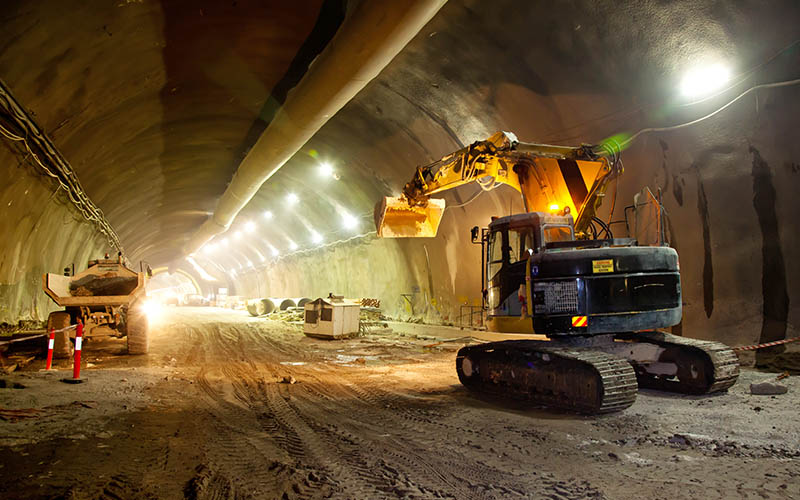
The Connectivity Conundrum in Tunnel Construction
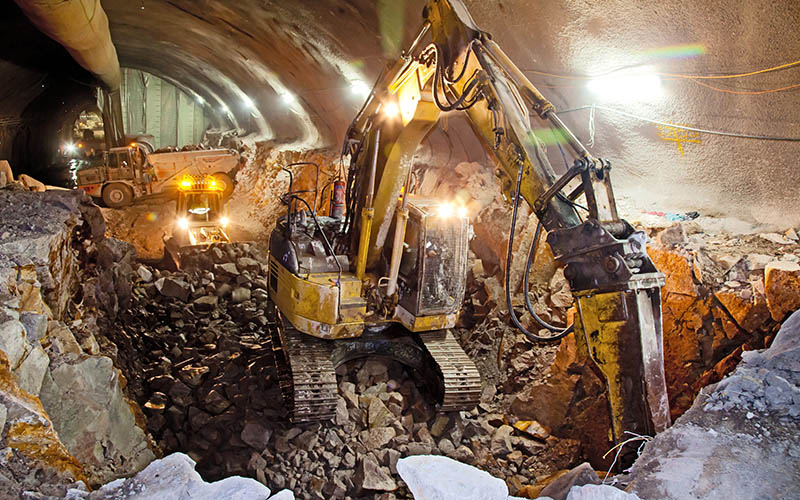
Construction sites are constantly changing and dynamic, especially tunnel construction sites. As workers dig and progress with their tasks, the site is changing, making it a temporary and ever-evolving environment. Heavy machinery and explosives break through rock formations while tunnel-boring machines meticulously carve out the path underground.
To ensure stable connection fiber cables are laid alongside the tunnel walls, providing reliable connectivity for autonomous vehicles, workers, and machinery. These cables enable real-time data transmission, facilitating seamless operation and control of vehicles, monitoring equipment performance, and efficient communication between workers.
However, a significant concern is the vulnerability of fixed cable infrastructure. Traditional networks rely on cables running through the tunnels, and if these cables are destroyed or rendered nonfunctional, it immediately results in a loss of connectivity. Imagine: the cable right at the beginning of the tunnel gets damaged, causing everything behind it to fail. The communication in all of the tunnel is dead.
Another inevitable issue is – as construction advances, the network needs to expand to freshly dug parts of a tunnel. Expanding the network and scaling the transmissions can be tricky.
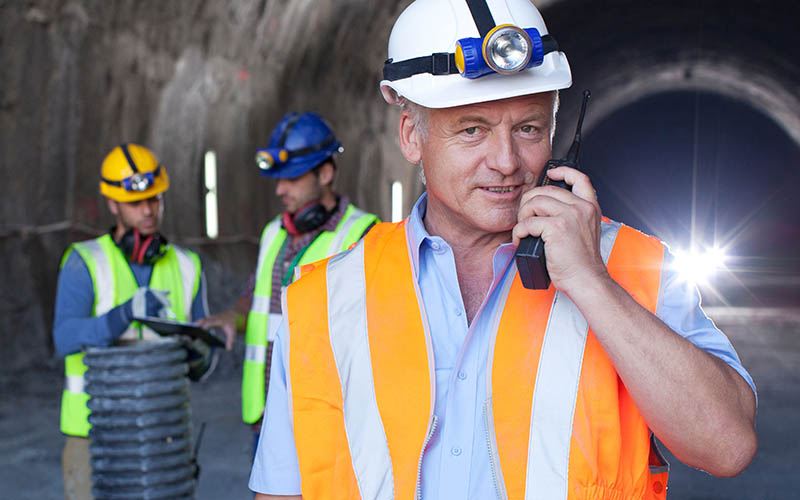
Use case 1: Failover Solution for a Dependable Plan B
Tunnel construction projects are known for their unpredictable nature. While cable installations provide a solid foundation, accidents and unexpected events can lead to disruptions. Meshmerize adds an extra layer of connection security, keeping you connected no matter what.
Meshmerize provides an ingenious failover solution that acts as a robust backup plan when the cable infrastructure is compromised. By seamlessly integrating with the existing network, Meshmerize is your reliable backup plan. It provides uninterrupted communication channels when you need them the most.
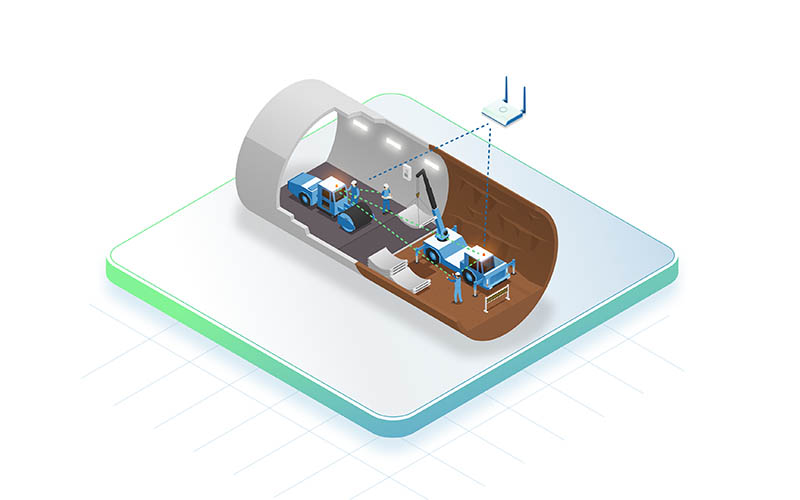
In the event of cable failures or outages, Meshmerize automatically switches to WiFi as a fallback, guaranteeing communication channels remain open and reliable.
Use case 2: Transforming Devices into Access Points for Seamless Communication in a Mesh Network
Deploying a robust mesh network within the tunnel construction site can take the connectivity to the next level. Meshmerize leverages its exceptional multi-path routing capabilities to establish a resilient network infrastructure.
In simple words, the mesh network consists of static Access Points (APs) and individual pieces of machinery, both acting as nodes. As long as two nodes or devices have visibility of each other, a steady connection is maintained.
As machinery, robots, and vehicles move through the tunnel, they act as wireless relays, extending the network coverage. By leveraging these mobile devices, construction personnel can maintain constant connectivity, irrespective of their location within the tunnel. This is particularly important, taking into consideration the changing nature of construction sites.
The Meshmerize Advantage: Affordability and Independence
There are two main points that set Meshmerize apart in the realm of tunnel construction connectivity: affordability and independence.
First and foremost, Meshmerize presents a cost-effective solution that enables you to optimize your network while keeping a close eye on your budget. By offering affordability without compromising quality, Meshmerize empowers you to achieve seamless connectivity without straining your resources.
As a hardware-independent solution, Meshmerize offers unparalleled flexibility in choosing the hardware that best suits your needs. With the potential to seamlessly integrate with your existing equipment, harnessing the power of uninterrupted wireless connectivity is as simple as a software update.
Remember, construction sites are dynamic environments and temporary operations are the norm. In such scenarios, a flexible and mobile solution, effortlessly deployed and redeployed for each new tunnel construction project is not just logical, but also highly practical. The ability to swiftly set up a reliable communication infrastructure on the fly aligns perfectly with the ever-changing nature of these sites.
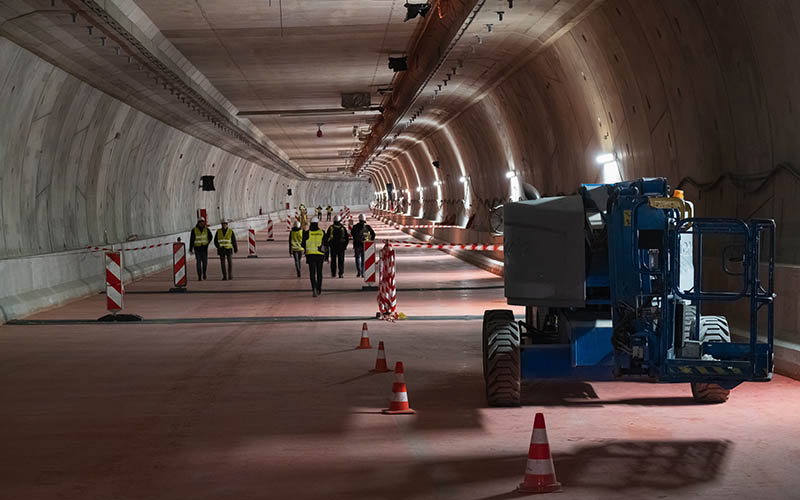
Efficient Connectivity that Gets You to the Other Side of the Tunnel
In tunnel construction, the work environment can be demanding and constantly evolving. Maintaining a stable connection becomes crucial as it directly impacts operations, productivity, meeting deadlines, and ensuring the safety of both equipment and personnel alike.
Meshmerize understands the unique challenges involved in tunnel construction connectivity. By integrating failover capabilities and implementing a mesh network, Meshmerize equips construction teams with a connectivity infrastructure that is remarkably flexible, adaptable, and future-proof. This solution not only enhances safety, productivity, and collaboration underground but does so in a resource-efficient manner.
Seize complete control of your connectivity, and reach out to us today! Every new project presents a fresh opportunity to showcase the reliability of Meshmerize time and time again.
Meshmerize is a startup based in Dresden, Germany that provides the ultimate mesh network software to an array of industries. The full potential of Meshmerize is yet to be seen. We would like to hear your thoughts – let us know what you think at hello@meshmerize.net