
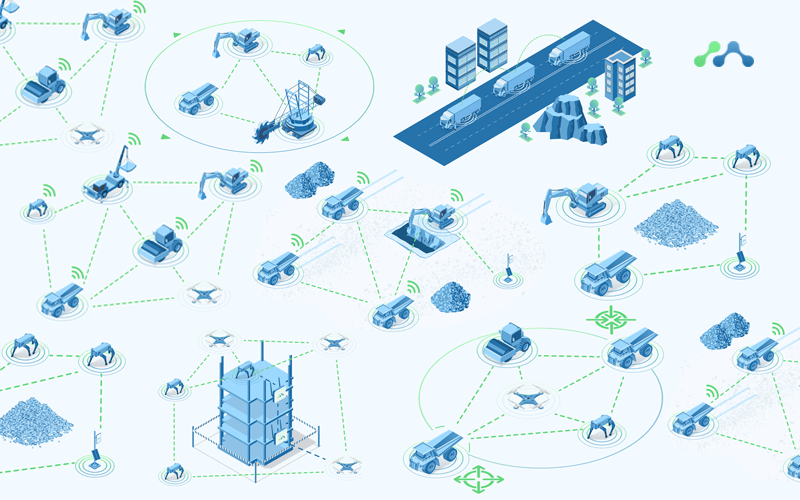
In the evolving world of construction, the rise of smart equipment, automation, and autonomous systems marks a significant shift towards more efficient operations. While still emerging, these technologies are increasingly becoming vital components in reshaping construction sites. However, this technological integration, while essential, is not without its challenges. The keyword here is ‘construction connectivity.’
With their ever-changing landscapes and dynamic structures, construction sites present unique connectivity challenges. Traditional networks often struggle to keep up with the complex demands of these environments.
Meshmerize mesh network software solution is purpose-made to meet the unique requirements of modern industrial sites, offering reliable and adaptable connectivity. Join us as we explore how Meshmerize addresses some of these challenges, fostering a more efficient construction connectivity approach.
Construction connectivity with Meshmerize
1. Blind spot navigation
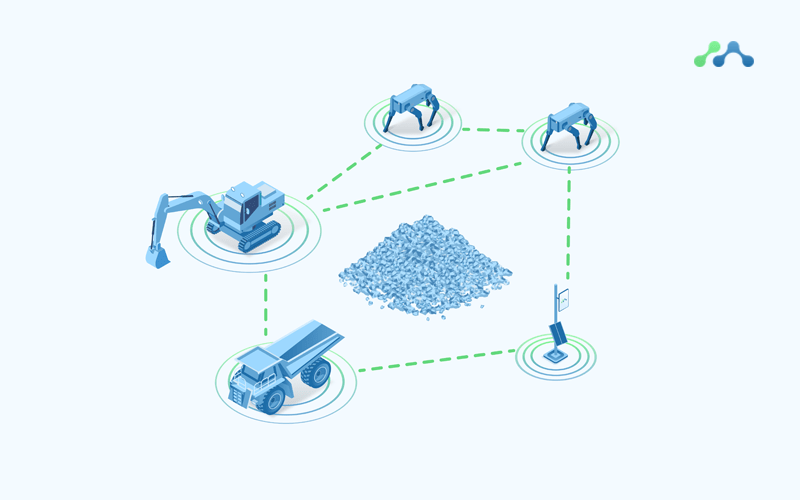
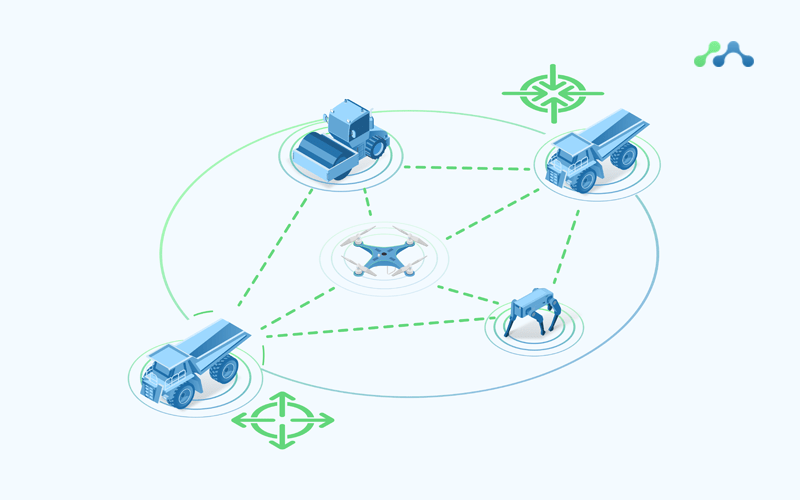
Blind spots in construction sites are literal network shadows caused by physical obstacles like metallic structures, material piles, or uneven terrain. Imagine an excavator moving behind a pile of dirt and instantly losing connectivity when it’s out of sight from the access point. This loss of connection turns it operationally dead, bringing it to a halt for safety reasons. In traditional networks, addressing this issue is challenging—if a machine enters a dead zone, it stops working, requiring manual intervention to resume operations.
Meshmerize innovatively mitigates this problem. The mesh network enables each piece of machinery to act as an access point and, therefore, a network relay. So, when that excavator goes behind a pile of dirt, as long as another machine is within sight, it maintains its connectivity. The result is no interruptions and continuous, efficient operation. Read more here.
2. Graceful network entry and exit
The movement of machinery on sites is not just continuous but also variable, with not every piece required on the network at all times. When machinery needs to perform specific tasks, it requires a seamless entry to the network. Once it completes the task, it exits the network to avoid clutter. Traditional network solutions, while allowing entry and exit, often fall short in efficiency. Each time a vehicle or piece of machinery joins the network, there’s a lag – a period of idleness or the need for manual intervention to establish the connection.
Meshmerize transforms this aspect of network management. It allows vehicles and machinery to gracefully enter or exit the network as needed, without delays. Proven Meshmerize connection establishing times are under one second. This swift and efficient transition is vital in construction sites, where uninterrupted communication is the key to preventing costly delays and maintaining smooth operations.
3. Remote operations – Teleoperations connectivity
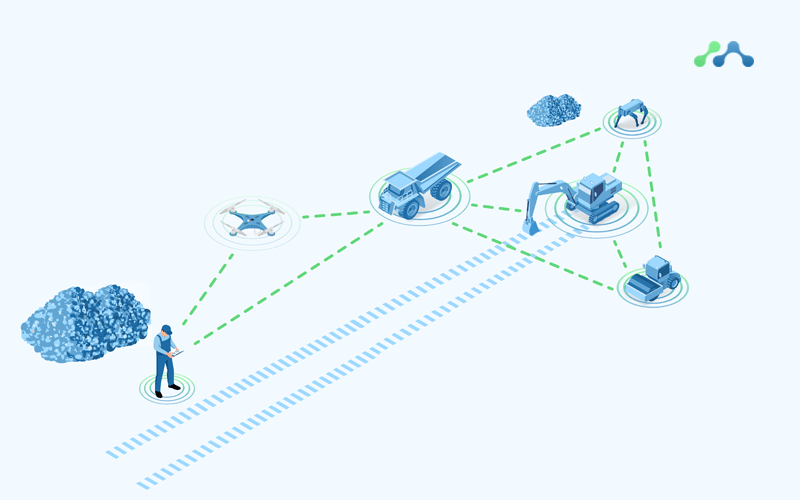
Teleoperations, or remote operations, are becoming increasingly crucial to construction projects, enabling remote control of machinery driven by precision. Imagine controlling a crane or an excavator a few hundred meters away. The operation cannot be successful if they don’t have reliable, stable, and uninterrupted connectivity. Even brief connectivity losses can significantly disrupt operations.
Construction and other industrial sites, frequently situated in remote or obstacle-ridden areas, face the challenge of unreliable traditional connectivity. Meshmerize tackles this with the help of relay links, such as drones, to bolster network reach and stability for remote operations. These relays ensure a continuous, robust connection between operators and their machinery that is vital for accuracy and safety. You can read about it in our blog about the 5G Fola project.
4. Site expansion = network expansion
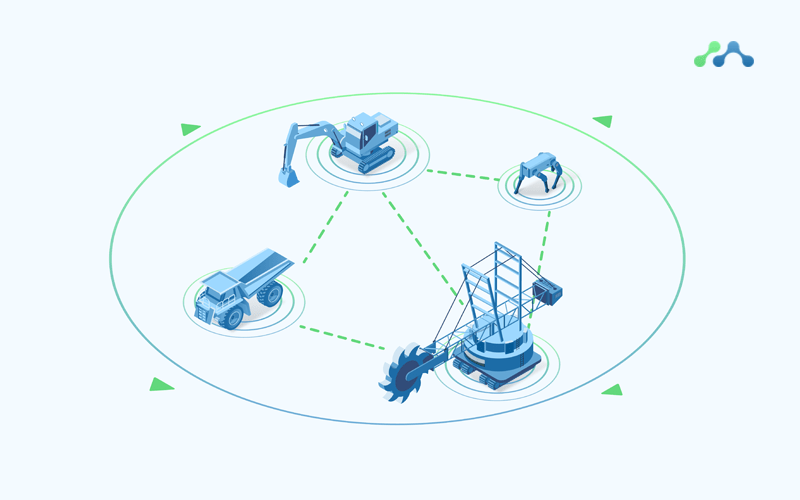
As construction sites evolve and expand, so does the need for their network to adapt and grow. The dynamic nature of construction often necessitates the network’s expansion to accommodate new areas and increased activities. Typically, expanding a network means extensive cabling, significant infrastructure investments, and installing new stationary equipment, a time-consuming and costly process.
Meshmerize network scales effortlessly with the construction site’s growth. Unlike connectivity solutions that rely heavily on fixed infrastructure, Meshmerize offers a truly wireless expansion. Powering up a new Meshmerize access point, static or mobile, seamlessly integrates it into the existing network without additional cabling or complex setup.
This innovative approach simplifies the expansion process and ensures consistent, reliable coverage across the entire site, regardless of its size or the complexity of operations. With Meshmerize, expanding the network becomes as dynamic and flexible as the construction site.
5. Platooning
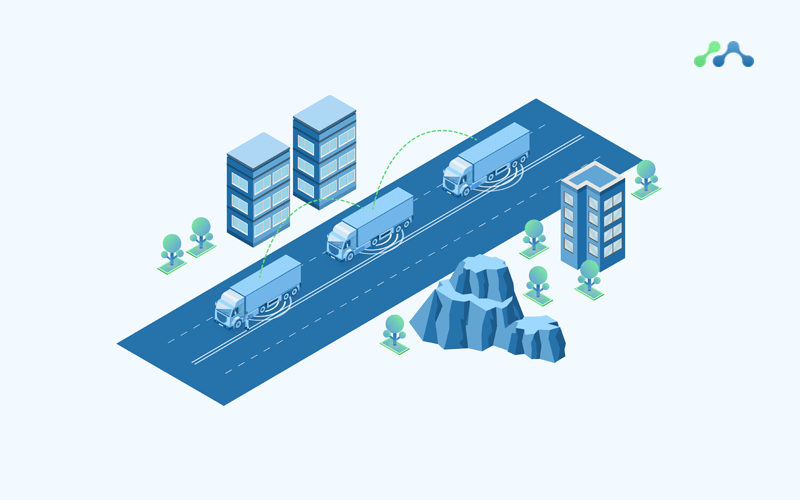
Platooning refers to the coordinated movement of a convoy of vehicles, often involving a mix of manned and autonomous trucks. This technique is valuable for transferring materials across diverse terrains, including off-road sites.
The most usual connectivity challenge in platooning arises during roaming, as each truck in the convoy must continually connect to new access points. The operation will be unsuccessful unless there is seamless roaming with minimal handover times.
Meshmerize addresses these challenges effectively. It turns each vehicle in the platoon into a mobile access point, creating an independent, reliable, and stable network.By doing so, Meshmerize maintains consistent connectivity and enhances the coordination and efficiency of platoon operations, making it a dependable and flexible solution.
6. Autonomous operations
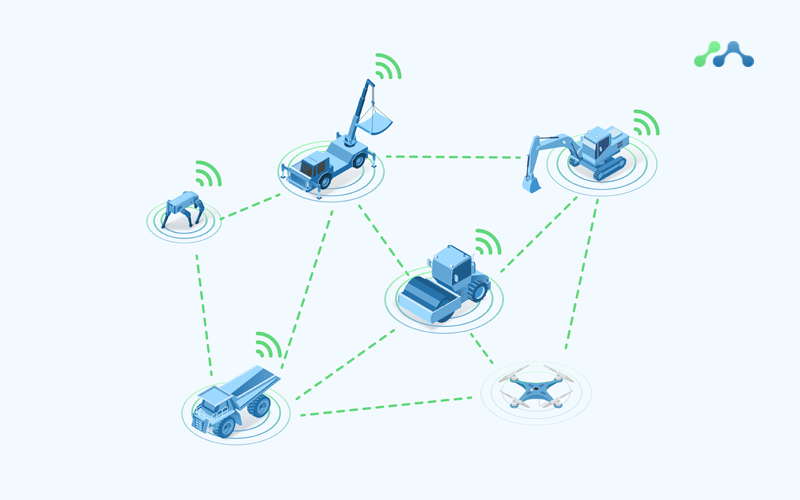
The rise of autonomous machinery and robotics is happening in the evolving construction industry, bringing a critical need for impeccable connectivity. Automated operations face physical obstacles, dynamic environments, and tasks demanding a network that supports constant, high-quality communication and real-time data transmission.
Meshmerize is uniquely poised to meet these demands. It ensures efficient communication and seamless integration with any hardware, from Spot robots to cranes. This adaptability is crucial in a sector with constantly changing site conditions and requirements. By providing a stable and reliable network that can adapt to the dynamic nature of construction sites, Meshmerize enables autonomous systems to operate safely and efficiently, overcoming common challenges such as site expansion and roaming issues.
7. Off-Road autonomous driving
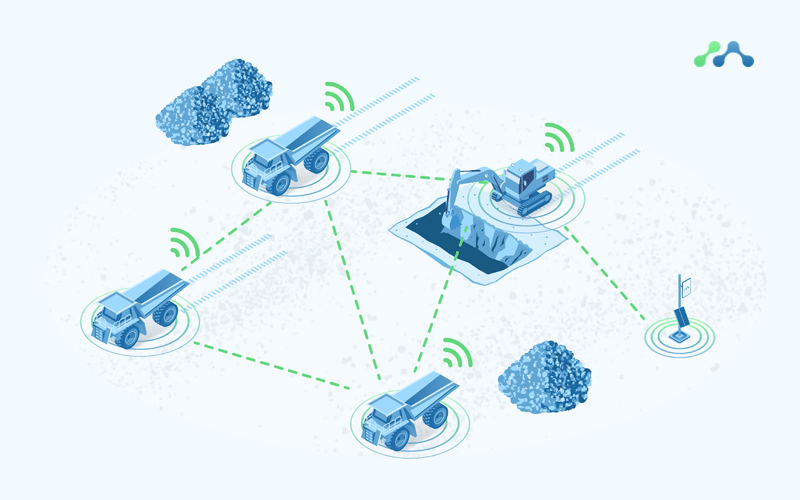
Off-road autonomous driving in construction is a complex task. Machines are confined to specific boundaries, and straying even slightly, by as little as 20cm, can bring autonomous equipment to a standstill, often necessitating manual intervention. Furthermore, off-road areas typically suffer from poor network coverage.
Meshmerize effectively addresses the off-road connectivity challenges, incorporating key benefits like blind spot mitigation, seamless roaming, and wireless network expansion. Its adaptability ensures continuous operation and safety in autonomous off-road driving. A significant advantage of Meshmerize in off-road environments is its cable-free network expansion, crucial in areas where laying cables is highly impractical. Additionally, its hardware-independent nature allows for effortless integration of various types of machinery into the network.
8. Construction site inspections
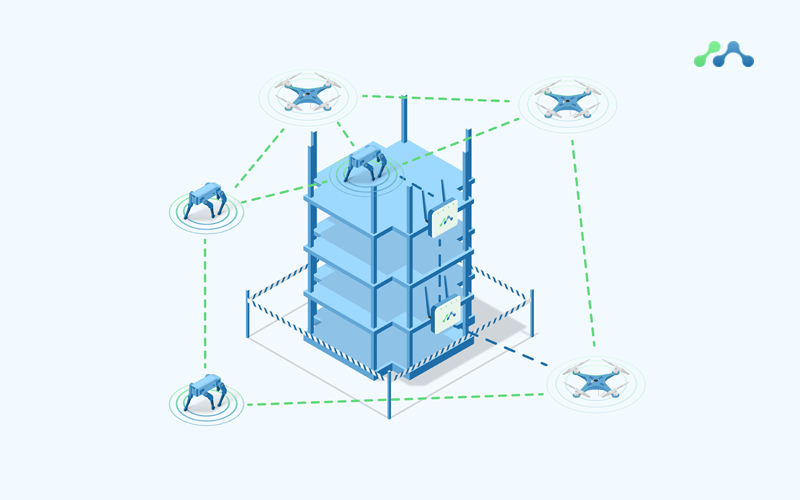
Traditionally manual, construction site inspections are increasingly automated, enhancing efficiency and safety. Mobile robots like Boston Dynamics’ Spot are pivotal, navigating dynamic sites filled with obstacles while carrying sensors, cameras, or other devices. They accelerate construction and increase site safety. However, the ever-changing site conditions, with new ‘obstacles’ being built every day, pose connectivity challenges. Meshmerize addresses this with its flexible, expandable network, offering reliable coverage essential for these autonomous systems to operate effectively in complex construction environments.
Mesh networks for a smarter construction landscape
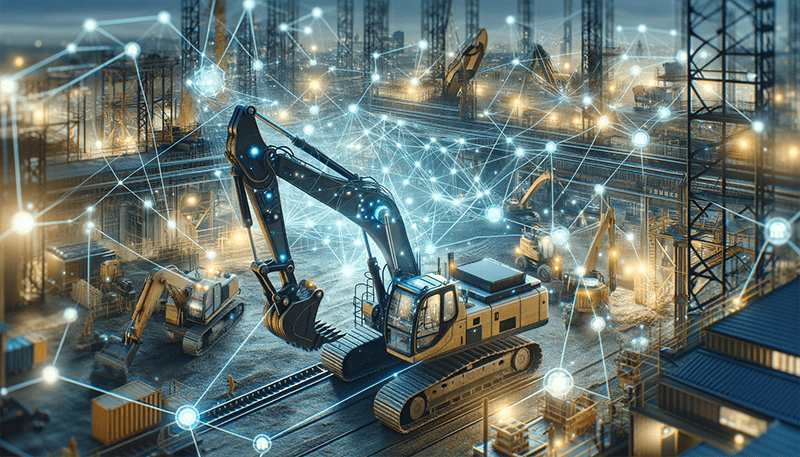
Meshmerize is steadily on its way to redefining the approach to connectivity challenges in the dynamic world of construction sites. Our mesh network software effortlessly showcases its adaptability and reliability in various scenarios, including overcoming blind spots, improving network transitions, and enabling off-road autonomous driving.
As we look to the future, Meshmerize is committed to being a catalyst in the construction industry. After all, building should be smarter, not harder.
Meshmerize is a startup based in Dresden, Germany that provides the ultimate mesh network software to an array of industries. The full potential of Meshmerize is yet to be seen. We would like to hear your thoughts – let us know what you think at hello@meshmerize.net