

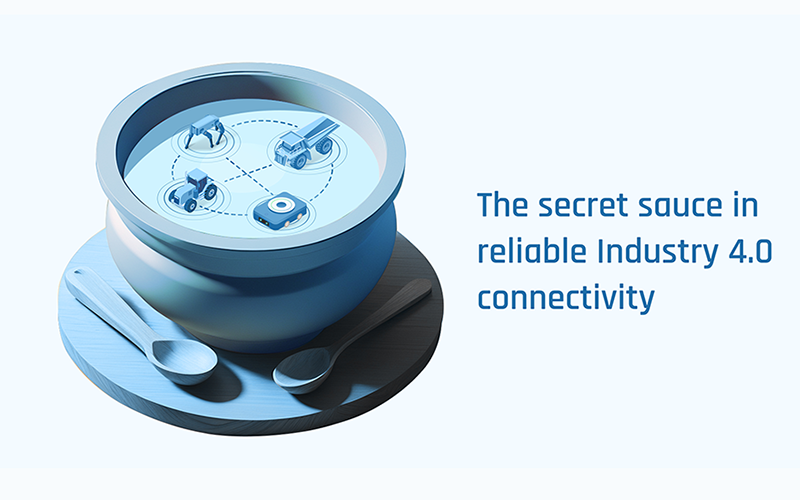
Routing protocol in advanced networks transcend mere technical necessities in the industrial landscape. They are the backbone of efficient communication. At Meshmerize, we understand this and constantly evolve our software to meet and exceed the demands of Industry 4.0, powered by a multipath routing protocol.
Our approach is primarily about understanding and addressing connectivity challenges in various industries. Through innovative solutions and a commitment to adaptability, Meshmerize is redefining what is possible in network communication. We provide a reliable and versatile networking solution where traditional methods may not suffice.
Join us as we explore the vital role of routing in mesh networks and present the cutting-edge multipath routing protocol that makes Meshmerize unique.
Let’s start from the top: basic concepts of routing protocol in mesh networks
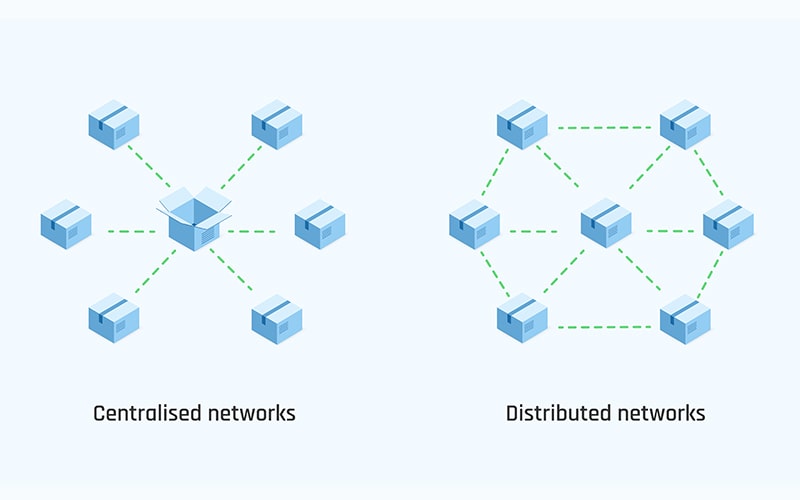
In understanding Meshmerize’s innovative multipath routing approach, it is essential to grasp the fundamentals of network routing. Traditional networks often rely on a hub-and-spoke model, with communication going through a central point.
In a mesh network, messages are dynamically routed, capable of ‘hopping’ from one node to another as they navigate through various potential paths to find the most efficient route to their destination. This flexibility allows the network to adapt to changing conditions, making sure that packets reach their destination via multiple routes if necessary, thereby enhancing the network’s robustness and reliability.
There are two main types of mesh networks: static and dynamic. Static mesh networks have fixed routes that do not change often, while dynamic meshes like Meshmerize adapt to environmental changes, ensuring efficient connectivity for mobile devices.
The unique Meshmerize approach: multipath routing protocol
Building on the basic concepts of mesh network routing, Meshmerize takes a step further. Unlike other dynamic mesh networks, our network software excels in rapid adaptability to network changes. This agility is pivotal in constantly shifting industrial environments.
Meshmerize responds to network changes and proactively anticipates them, adapting at a pace that outstrips other mesh networks for superior connectivity. This results in a network that connects efficiently and responds almost instantly to physical and digital environmental alterations, ensuring an uninterrupted communication pathway.
The multipath routing Meshmerize advantage
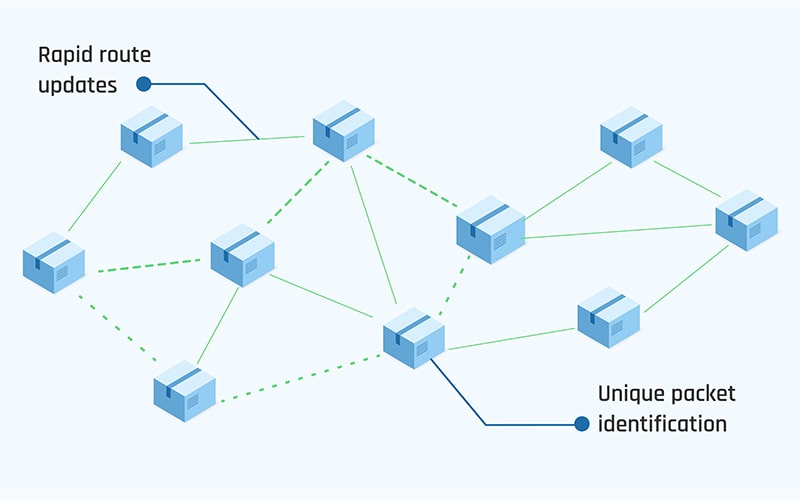
Meshmerize elevates multipath routing to new heights by implementing ultra-fast routing updates, almost instantaneous. This remarkable speed allows the network to adapt in real time to ever-changing conditions, ensuring consistent connectivity.
- Risk diversification balancing
Meshmerize’s multipath routing excels in dynamic network environments by rapidly adapting routing paths. This quick update capability is key to our risk diversification strategy, allowing data to be distributed across multiple paths efficiently.
However, Meshmerize is strategic in applying this method. Since WiFi is a shared medium, continuous risk diversification through multiple paths can overcrowd the network. Therefore, Meshmerize strategically diversifies risk only if unstable connectivity occurs, ensuring efficient network use and avoiding congestion.
- Unique packet identification
Unique packet identification is another thing that sets Meshmerize apart from other mesh networks. So, each packet is being sent through multiple routes. Each packet is uniquely identified to ensure the integrity of the transmitted data, allowing for accurate reassembly at the destination, regardless of the route or order of arrival.
In this process, imagine constructing a complex Lego masterpiece. Each brick, journeying through various paths, snaps into place just right. With Meshmerize, it’s the network itself—every node acting in concert—that ensures these data Lego bricks are meticulously sorted and reassembled. This collaborative effort guarantees that the final message is not only complete but also coherent, leveling up the game on how dynamic networks handle data transmission.
Charting future connectivity paths with Meshmerize’s multipath routing protocol
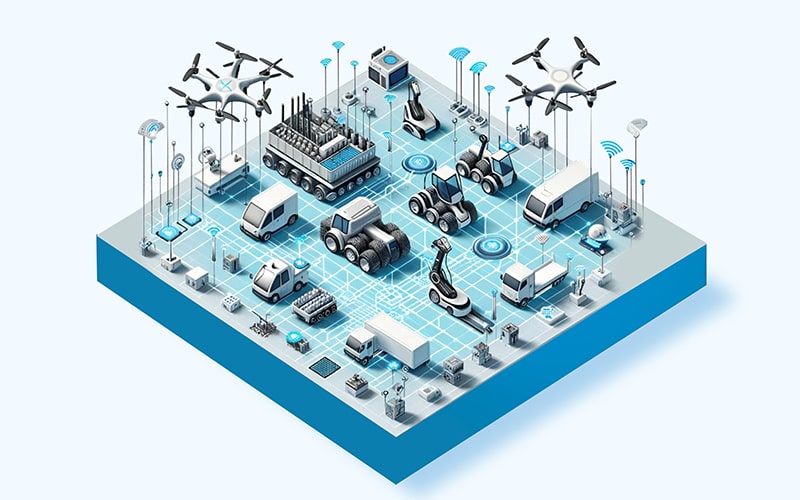
Meshmerize’s approach to multipath routing revolutionizes the way mesh networks work, offering a transformative solution tailored to the complexities of the modern industrial era. As the demand for unwavering connectivity in Industry 4.0 grows, Meshmerize is at the forefront, evolving to meet the rise of robotics and autonomous systems across industries.
Our multipath routing protocol is central to how Meshmerize software outperforms alternatives and significantly boosts industrial operations. This focus is vital in delivering superior connectivity software. We continuously grow and upgrade the software, driven by industry needs and potential advancements.
Join us in the path of innovation and help shape the future of dynamic network communication. Your insights and feedback are vital in steering Meshmerize towards even more groundbreaking achievements in reliable and efficient networking.
Meshmerize is a startup based in Dresden, Germany that provides the ultimate mesh network software to an array of industries. The full potential of Meshmerize is yet to be seen. We would like to hear your thoughts – let us know what you think at hello@meshmerize.net